
Ten Rand: A Philosophical Analysis of Kendrick Lamar’s To Pimp A Butterfly
Author’s Note
Jean-Paul Sartre’s existential ideologies describe facticity and transcendence as the fundamental structures of human existence. Facticity refers to the aspects of life that are inherently unchangeable, such as race, history, birthplace, and family. They are situational constraints; the facts of one’s existence. On the other hand, human freedom is transcendence. Transcendence is the human ability to extend yourself beyond these given “facts,” which can be exercised through conscious choices. Denying or ignoring your facticity is the denial of reality. This is like pretending your circumstances do not matter. Existence is both facticity and transcendence. In denying facticity, one chooses to ignore the unchangeable facts of life to avoid certain responsibility. This is also the definition of bad faith. The notion of transcendence without facticity would not be possible without the idea of some “Other” possessing facticity unaccompanied by transcendence. The dilemma that lies within this view can be seen through the words of Sartre: “To treat a man like a dog, one must first recognize him as a man. The concealed discomfort of the master is that he always has to consider the human reality of his slaves” (1). The bad faith of this situation is in the fact that the “master” must lie to himself and deny his acknowledgment of the fact that he ever considered the slave to be a man.
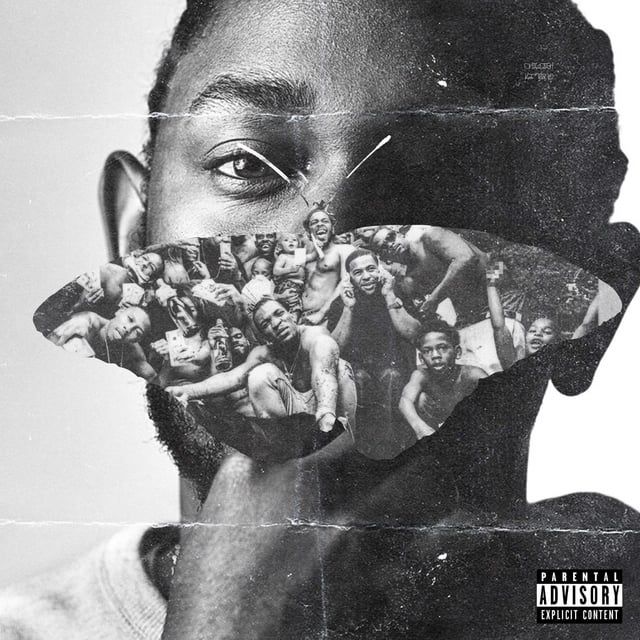
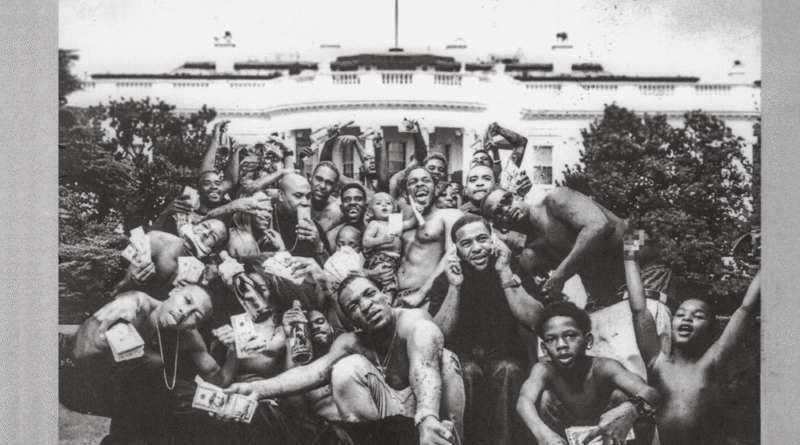
To Pimp a Butterfly is said to be one of the greatest Hip-hop albums of all time, having an immeasurable impact on the Hip-hop community and Black culture around the world. Two songs on the album, “How Much A Dollar Cost” and “Mortal Man” establish ideas relating local actions and global issues in particular. This essay will argue that through the narration of real-life encounters with a homeless man, Nelson Mandela’s prison cell, and more enlightening experiences during his time in South Africa, Kendrick Lamar expresses the philosophical ideas of Robert Birt, Jean-Paul Sartre, and Stephen Thompson, on “How Much A Dollar Cost” and “Mortal Man.”
On the eleventh track of To Pimp A Butterfly after 22 seconds of soulful, melancholy chords and smooth, swinging drums, Lamar abruptly asks, “How much a dollar really cost?” followed by the lines, “The question is detrimental, paralyzin’ my thoughts / Parasites in my stomach keep me with a gut feeling, y’all” (2). He introduces the central question that is reflectively examined on this track, followed by the first instance of introspective thought that the audience hears from Lamar. To me, the lines where Lamar describes how the question affects him seem to represent his mental state, and its relation to his desire for money. His mental health, or peace of mind, is being exchanged for wealth, as the next line mentions him parking his “luxury car” (3). The intentional mention of the luxurious life that Lamar is currently living offers an introduction to the song’s connection to Birt and Sartre’s ideas of “bad faith.”
Before diving into bad faith, it is important to note that in this song, Kendrick Lamar is recounting a time in which he exhibited some sort of existential ignorance, and he is now narrating the story from a perspective that he gained, following a deep reflection on his time in South Africa. So, the character within the song, despite it reportedly being based on a true story, is separate from the voice of Kendrick Lamar that we, as the audience, hear. This exemplifies ideas asserted in Stephen Thompson’s writing within “Hip-Hop and Philosophy: Rhyme 2 Reason.” Thompson explains that there are two main models that can be attributed to lyricism, and a synthesis of the two is necessary for an audience to understand a lyricist’s intention. Here, Lamar follows Thompson’s idea that a successful Hip-hop lyric must be “enlightening, entertaining, and even poignant in telling the as-if truth from the lyricist’s adopted persona,” which originates from his narrative story model (4). These events that Lamar recounts may be factual (up until the very end of the song which contains lyrics that discuss a higher power and some other religious values, i.e. the rapper did not actually meet God), but even if lyrics aren’t factual in terms of the lyricist’s real life or experiences, the lyrics can still be capable of conveying truth in terms of the lyricist’s persona. The lyricist’s persona, in this case, appears to be the “Kendrick Lamar” that has yet to be enlightened by existentialism, humility, religion, or whatever else he encountered during his trip to South Africa and the making of this album.
Hence, Kendrick Lamar introduces the monetary wealth that he possesses at the time that the song takes place. It is important that Lamar established this wealth as the song goes on to discuss his interaction with a homeless man, or a man in a circumstance that does not require much thought from an outside perspective to assume his financial situation. He pulls up to a gas station in his previously mentioned “luxury car,” has some language-barrier-trouble with the clerk, and leaves. Lamar writes, “Walked out the gas station / A homeless man with a semi-tan complexion / Asked me for ten Rand, stressin’ about dry land” (5). Interestingly, this lyric could easily be misinterpreted by listeners who are unfamiliar with South African currency; because “rand” sounds strikingly similar to “grand,” an outsider might interpret this as a homeless man asking for far too large of a donation, rather than realistically asking for the equivalent of around half a U.S. dollar, today. It is debatable whether this was intentional, but it effectively mirrors the rapper’s underlying perspective. Later in the song, we find out that, for reasons that will later be explained, in Lamar’s opinion, a homeless man asking him for any amount of money is too much to begin with. The possible intention to stress the words in a way that evokes shock in the audience is an interesting way that Lamar could be conveying his own feelings toward the situation.
“To deceive oneself while also denying that intention” is Robert Birt’s definition of bad faith (6). In lying to others, your intention is to lie. You are fully aware of this intention and the only people that you try to hide this intention from are the people you attempt to deceive. In bad faith, you are lying to yourself just as much as you are extending that lie to others. Throughout Birt’s “The Bad Faith of Whiteness,” it becomes clear that lying in bad faith often involves an inevitable conscious awareness of that self-deceit, and “How Much A Dollar Cost” perfectly encapsulates this.
There are several lines throughout the song where Lamar provides a response, or a sort of justification for why he refuses to help the man, and all of them can be analyzed to gain a different perspective on his life and psyche. To quote a few, Lamar writes:
“A piece of crack that he wanted, I knew he was smokin’ / He begged and pleaded / Asked me to feed him twice, I didn’t believe it / Told him, “Beat it” / Contributin’ money just for his pipe—I couldn’t see it.”
He writes, “The reason why he was mad at a stranger / Like I was supposed to save him / Like I’m the reason he’s homeless and askin’ me for a favor.”
“I should distance myself, I should keep it relentless / My selfishness is what got me here, who the fuck I’m kiddin’? / So I’ma tell you like I told the last bum / Crumbs and pennies, I need all of mines / And I recognize this type of panhandlin’ all the time / I got better judgment, I know when n****’s hustlin’…”
“Every nickel is mines to keep” (7).
In all these lines, self-deception is exemplified. Lamar justifies his refusal to give the homeless man money by framing himself as rational. He lies and tells himself he’s being responsible by saving his money as opposed to “wasting” it on this man. In reality, he is simply avoiding the existential truth: he does not want to help. He can pretend that his choice is determined by logic and rationality all he wants, but beneath all of that, he is denying his freedom to choose compassion, subsequently denying his own transcendence, thus exhibiting bad faith.
I feel it is necessary to include another perspective of bad faith through Birt’s writing. The philosopher states that “to embrace whiteness is to embrace the bad faith of privilege,” but in order to have whiteness–which he also defines as transcendence without facticity–there must also be a denial of transcendence in an “Other” (8). Birt derives this relationship from that of which a “master” related himself to a slave, reducing said slave to nothing more than property as opposed to a human being. In the context of “How Much A Dollar Cost,” Lamar distances himself from the homeless man, creating an “Other.” He reduces him to nothing more than a facticity. In doing so, he essentially attempts to distort reality to maintain his own outlook on his moral position. This refusal to recognize the man’s humanity reflects the relationship between the master and the slave, and although it lacks the aspect of race that slavery possessed, in essence, it equates.
“Mortal Man,” is the conclusion to this album and provides an authentic global outlook on the existential ideologies that have been previously mentioned. On this track, Lamar mentions several influential figures, like Malcolm X, Moses, Michael Jackson, and Huey Newton. Nelson Mandela, and the South African anti-apartheid revolt that he led in particular, capture the essence of Julius Bailey’s writings in the chapter titled “Hip-Hop and International Voices of Revolution” within his book, Philosophy and Hip Hop: Ruminations on Postmodern Cultural Form. Bailey explores what distinguishes revolution from renaissance by diving into different forms of global revolution while identifying key aspects of Hip-hop within them. Nelson Mandela is a prominent presence within “Mortal Man,” and the revolt against Apartheid in South Africa develops throughout this song alongside notions of bad faith.
Lamar begins the song by saying “the ghost of Mandela, hope my flows they propel it / Let these words be your Earth and Moon you consume every message,” immediately introducing the influence that Mandela had in South Africa and beyond (9). After a few more bars, he introduces the central message of the track, challenging his audience by asking “When shit hits the fan, is you still a fan?” (10). Here, and every time this line is repeated in the chorus, what Lamar means to ask is whether his audience judges people as fixed identities or as evolving human beings who are capable of making mistakes. He questions whether or not they define others by a singular action, especially when their actions do not align with their fixed views. The liberation of South Africa is one real-life example, or case, for the question he is asking. During the revolution, Nelson Mandela was seen by the people as a radical leader that aligned with their own goals of liberation: a “true” hero. After he was imprisoned and eventually granted his freedom, however, his focus shifted from fighting oppression through radical violent revenge to forgiveness and political reconciliation. Evidently, some of his supporters viewed this as a betrayal to the revolution that he had such a prominent role in. It seems likely that Lamar is attempting to draw a comparison between influential revolutionary leaders like Nelson Mandela or Malcolm X and himself, and subsequently revealing a deep fear of the position that he finds himself in. Lamar, like the others that he mentions throughout “Mortal Man,” is seen as a voice of the people and of the culture. This position comes with intense public examination and expectation, and a substantial risk of being abandoned in failure.
Lamar employs historical circumstances to further the comparison, but his message does not end with his own fears and critiques of society. The message he is trying to send is not just about Kendrick Lamar and his fans. It is about how society as a whole treats leaders. It is about how they treat people in positions of power, like revolutionaries or politicians. It is about how humanity treats each other. Leaders and celebrities are often transformed by the people into perfect heroes, and when they act like humans, society turns their back. The people of South Africa projected an image on Nelson Mandela, and when he matured and changed as a human being, they felt betrayed. Avoiding the truth in the fact that everyone is constantly evolving in so many ways exemplifies Sartre’s ideas of bad faith. In some cases, celebrities and leaders are transformed into the previously mentioned Other. Even if the Other’s humanity is denied by the people ignoring their ability to make human mistakes and not based on race or another unsubstantiated notion of inferiority, their humanity is denied nonetheless.
To Pimp A Butterfly is one of the greatest albums of all time, possessing a timeless ability to exemplify the writings of existentialist philosophers. I am immensely appreciative that I am now able to view it from this existential standpoint. I sometimes valued this album and these songs for their spiritual messages, but most of the time I simply enjoyed the melodies and flows. The homeless man revealing himself as God in the end of “How Much A Dollar Cost” and forcing Lamar to reflect on his selfish decisions opened my mind to the principle of generosity for generosity’s sake and its necessity within many religions. But this song holds meaning beyond that of religion, and I can appreciate it that much more after gaining the philosophical knowledge that Dr. Devon Johnson has provided me. The same goes for “Mortal Man” and many other songs with deeper messages that I had not been educated enough to grasp. Birt, Sartre, Thompson, Dr. Johnson and many more artists and individuals have provided me with a new meaning for music, lyricism, and concepts of life, and I am glad to have been able to share that knowledge through the analysis of Kendrick Lamar’s music.
–––––––––––––––––––
- Robert Birt, What White Looks Like: pp 55-63 “The Bad Faith of Whiteness” (Routledge, 2004), 60
- Kendrick Lamar, “How Much A Dollar Cost” December 12, 2018, https://www.youtube.com/watch?v=y8kEiL81_R4
- Lamar, “How Much A Dollar Cost”
- Derrick Darby, Tommie Shelby, Hip-Hop and Philosophy: Rhyme 2 Reason (Open Court, 2011), 120
- Lamar, “How Much A Dollar Cost”
- Robert Birt, What White Looks Like, 56
- Lamar, “How Much A Dollar Cost”
- Robert Birt, What White Looks Like, 58
- Kendrick Lamar, “Mortal Man” December 12, 2018, https://www.youtube.com/watch?v=axwpgn3GRMs
- Kendrick Lamar, “Mortal Man”


