REVIEW: MACBETH @ Temple
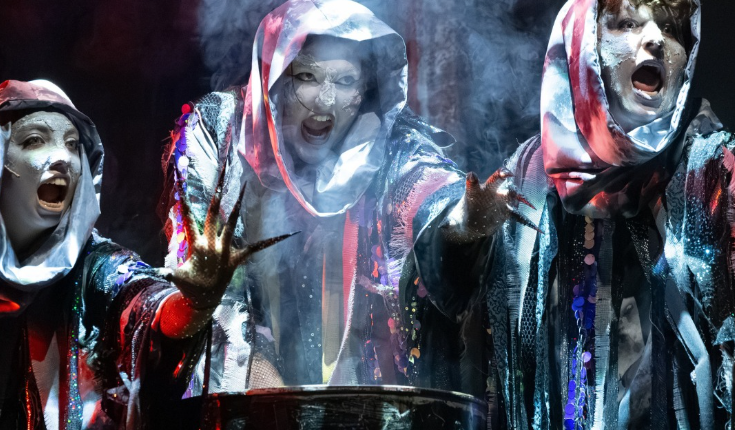
Macbeth at Temple felt less like a genuine Shakespeare production and more like a post-apocalyptic rave. The technical theater program was at its best; the smoke, lights, and nuclear explosive opening were totally immersive. The costumes looked straight off a gothic-distressed runway; the props included multiple convincing human heads. With ensemble running up and down the aisles, and pop-fight soundtracks, the audience was hooked, reacting with cheers and gasps at every twist, turn, and beheading.
Incidental to the spectacle of the show was the substance. The performances bordered on camp, with reaction quips delivered like reality TV cutaways. No one seemed quite sure what the meaning of their lines were, and much of the subtext was blown over to favor, I will admit, some of the cuntiest line readings I’ve ever heard. Lady Macbeth’s line deliveries sometimes resembled Eartha Kitt as Yzma in The Emperor’s New Groove.
Marcus Giamatti, the play’s director and brother of acclaimed actor Paul Giamatti, made a series of strange directorial choices, including having Macbeth fully turned away from the audience at many crucial moments. The story, like a good party, felt devoid of stakes. The character’s choices came seemingly out of nowhere and felt heavily motivated by shock value. Even the setting itself removed stakes from the story. Macbeth is about power, why we seek it, what we do to keep it. In a post-apocalyptic setting, the production then must create and justify the circumstances of power. It is an ambitious, uphill battle of a setting that was almost totally unrealized in this production.
This is not to say there were no moments of depth. The assassins Macbeths hires were portrayed as a poor couple with a baby, committing atrocities for a bag of bread and apples. Lady Macduff gave a very sincere performance, and her murder was the most impactful murder of this very bloody show. Far on the other end, the only intentionally comedic moment in the show, the Porter’s monologue, was very funny, and nailed every archaic joke. But aside from these beats, two of which I would credit entirely the actors’ performances, the show failed to explore its most interesting themes.
Classical texts, such as Shakespeare, can feel stuffy to a modern audience. This show felt alive, vibrant, and violent. However, when the primary cast does not understand the meaning of their lines, the show has nothing that it is trying to say; the reason for the timelessness of the text gets lost. Every student did a great job, and I will be seeing the next production—however, for good Shakespeare, turn elsewhere.
Cover image via @templetheaters.