Ecuadorian Fashion Show
By: Annika Verma
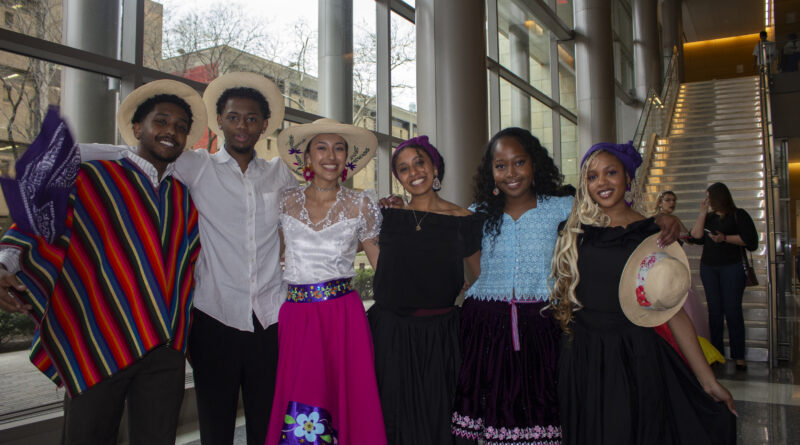
On Friday, March 27th The Science Education Research Center’s lobby was animated by vibrant clothes and people bubbling with excitement—a welcome sign for the start of an Ecuadorian Fashion Show. This animation never fizzled out because of the 25 models and performers who treated the lobby’s grand staircase as a walkway and floated down with grace to show off Ecuadorian clothing. Karen Barba-Castro, the event creator and lead, was the final model—dressed in a white lace blouse, a patterned shawl, and a vivid pink and purple pollera.
Barba-Castro is a recipient of the You Are Welcome Here scholarship, an initiative that recognizes international students who have a vision for sharing and deepening intercultural understanding. As an international business major, Barba-Castro has always felt the urge to share Ecuadorian culture, explaining that “I think that we’re so stuck in UK/USA history that we forget about rich, diverse countries like Ecuador.”
The International Student Affairs Office and marketing director Alex Quach both assisted in helping Barba-Castro’s vision come to life. “I was talking about it like I was doing New York Fashion Week – it was that serious,” says Barba-Castro.
Another crucial member of the team was Grace Zweitzig, a senior media studies and production major who emceed the fashion show. Her opening statement featured a clear, confident introduction as she said, “Bienvenidos! Today we celebrate Ecuadorian culture through fashion and dance. Each design you’ll see tells a story of heritage, community, and pride.”
Zweitzig introduced the show with the specific structure it would follow. The show highlighted the three regions of Ecuador: El Oriento, located in the Amazon, La Costa, a coastal region, and La Sierra, a mountainous region. Each region was animated by the smiles and dance moves of models, but also through Zweitzig’s specific explanation of the clothes worn, and why they are indicative of that region.
The first models represented El Oriento by honoring the Shuar people of the Amazon. Women were draped in a karachi, a garment adorned with natural beads, seeds, and feathers. The men wore an itip, a skirt-like cloth made from plant fibers. A connective accessory was the feather crown and body paint, which are often worn during ceremonies to display strength, connection with sacred animals, and greater cultural symbolism. Then, the group performed an empowering dance honoring the traditions of the Shuar people.
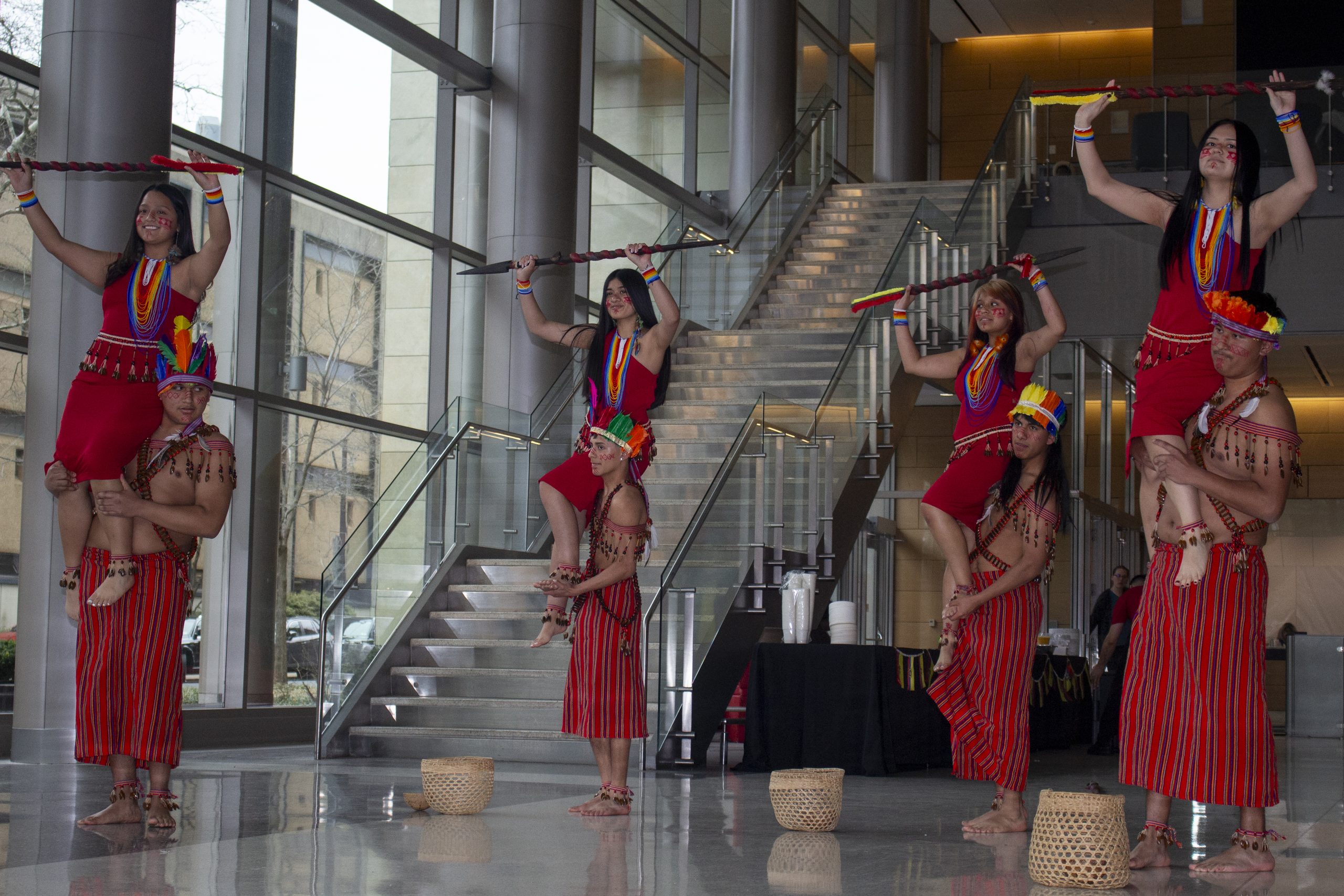
With the dance, the SERC’s lobby was sonically soaked with the sound of the chajchas—a rattle mimicking rainforest sounds, the feet of the dancers, and the rhythmic clapping of audience members—enlivening an otherwise quiet academic building.
The second segment represented the La Costa region, known for its Afro-Ecuadorian community, where women wear multicolored, wide skirts with detailed blouses and headwraps.
Then, as part of a general inclusion of Latin traditions, the next look celebrated the Quinceañera, an event celebrating a girl’s transition into womanhood. It is often associated with large, ornate gowns to represent femininity and grace. The show featured a pink dress with a structured, gemmed bodice and a tulle skirt section
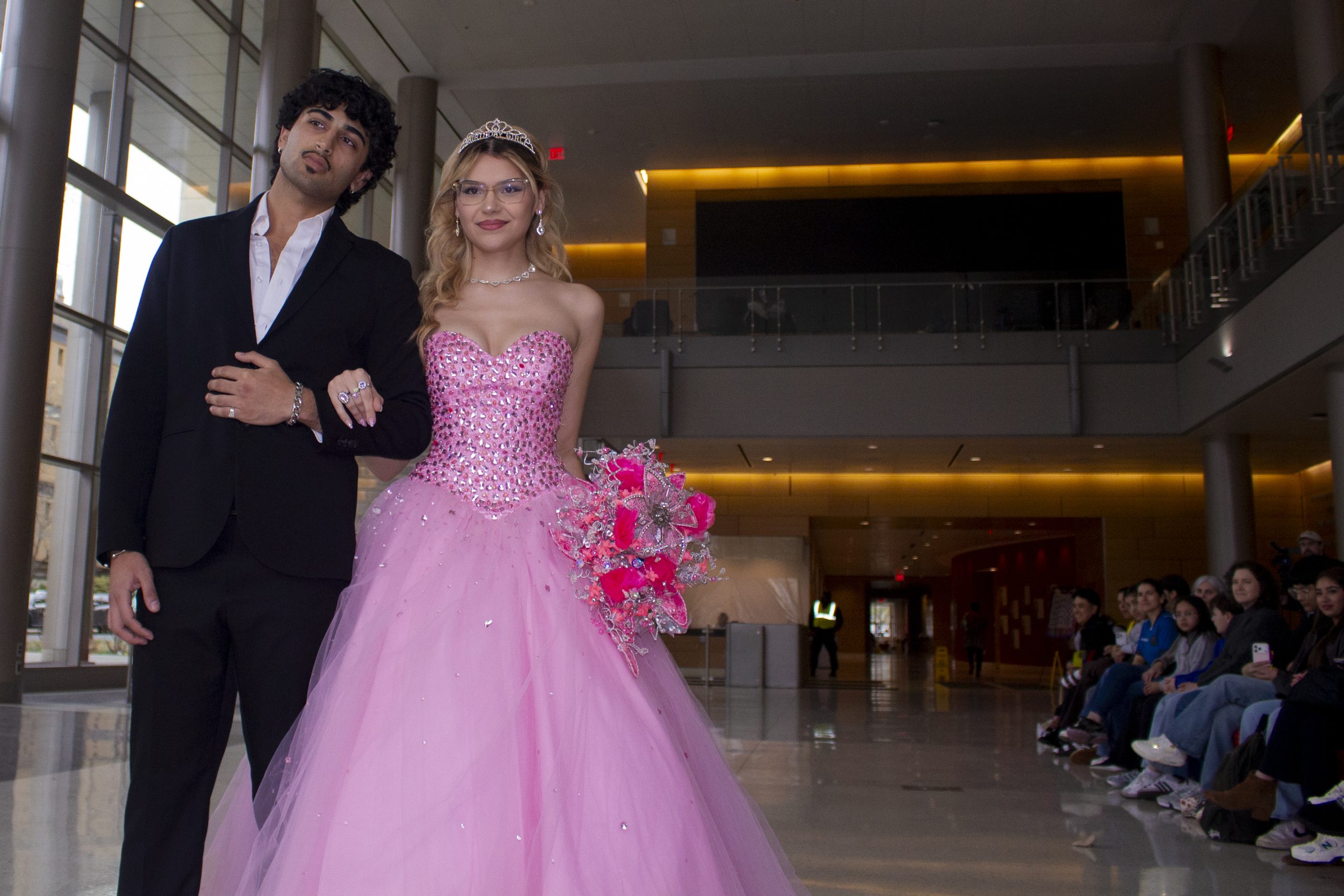
Priscilla Bravo, a sophomore biochemistry major, modelled for the show. Her experience was enlightening and unifying: “Representation helps us become united, and I got to connect with other Ecuadorian girls. Events like these help us find each other, express ourselves, and emphasize that we are important and that our culture is beautiful and should not be forgotten,” says Bravo. She echoes Barba-Castro’s previous sentiment of how Southern culture isn’t shared as it should be. She says, “It’s so hard to find Ecuadorian representation in media or honestly anywhere, so having this event and participating was so refreshing.”
The third segment focused on the La Sierra region, highlighting the Andean culture and Otavalo community. Models wore multicolored fabrics, starting with a white linen shirt, called a kushma, which represents Mother Earth. Then, a colorful wrapped skirt called an anaco to add textural layers, and a guagua chumbi, a bright woven belt to provide structure.
The next look highlighted the Zuleta community, known for their agriculture and intricate embroidery, through pleated skirts, woven belts, and a llama wool zamarro, or coat.
La Sierra’s final look was a presentation of El Diablo Huma, visually presenting as a double-faced mask with a name that means “spirit head.” This two-headedness represents natural binary forces, like good and evil, or sun and moon. The mask’s four ears are often related to the four cardinal directions and the four elements—air, fire, water, earth—indicating harmony between humans, the natural world, and the cosmos.
Diablo Huma is a part of Indigenous rituals as a celebratory fixture. Despite its colonial association as “diabolical,” it remains a protector and symbol of cultural identity, connectivity, and resilience.
Multiple models represented El Diablo Huma in the La Sierra region’s final performance, and they interacted with audience members by leaning forward into the crowd.
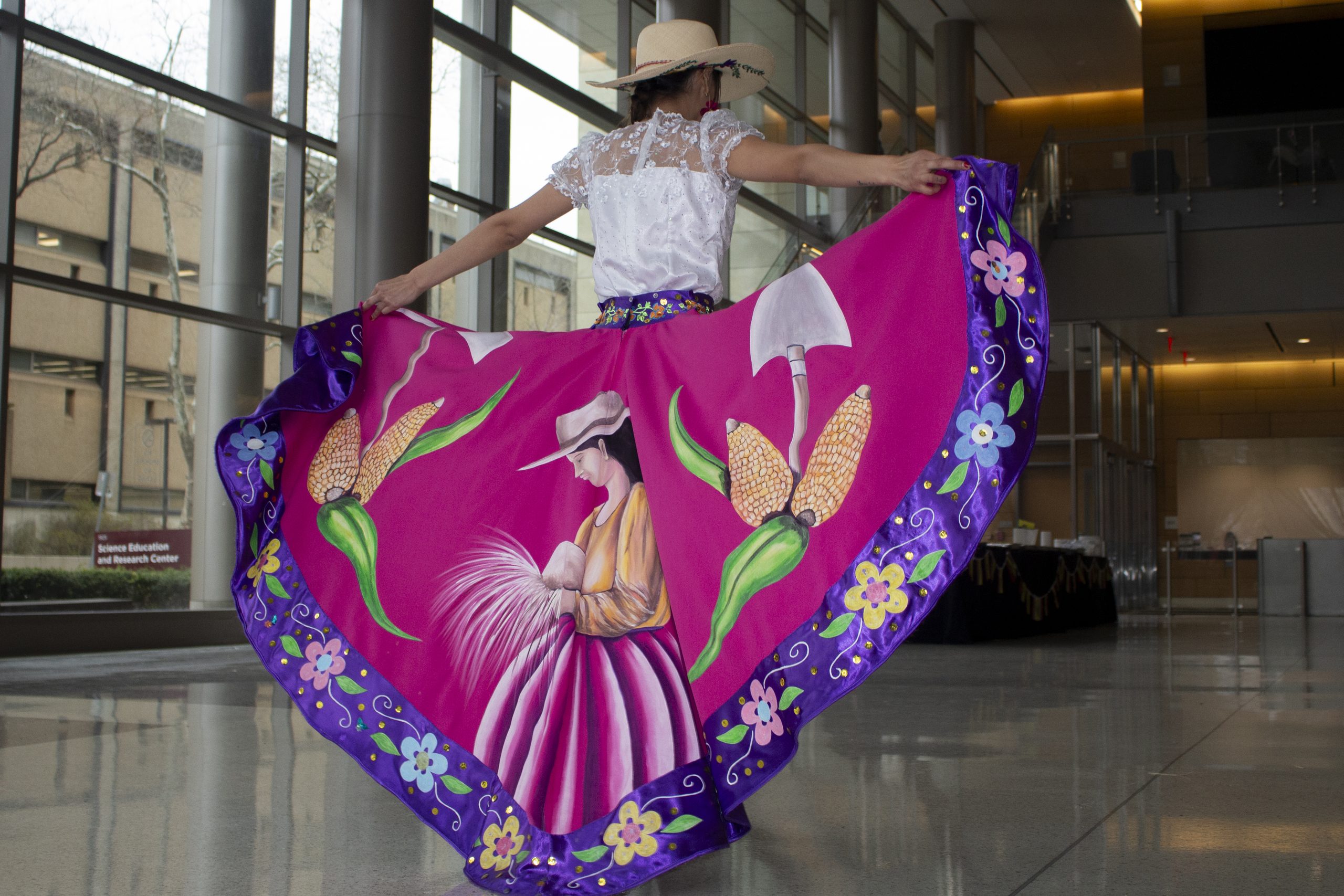
The show ended by spotlighting Barba-Castro’s personal connections to the La Sierra region, and a tribute to her grandmother, who wears traditional Ecuadorian attire with pride. Barba-Castro emerged with a pollera that had been her aunt’s, Norely Castro, when she won Queen in a regional competition similar to a United States beauty pageant. The pollera was painted to show a woman weaving a paja toquilla, a straw hat, tying back to the region’s rural, agricultural roots.
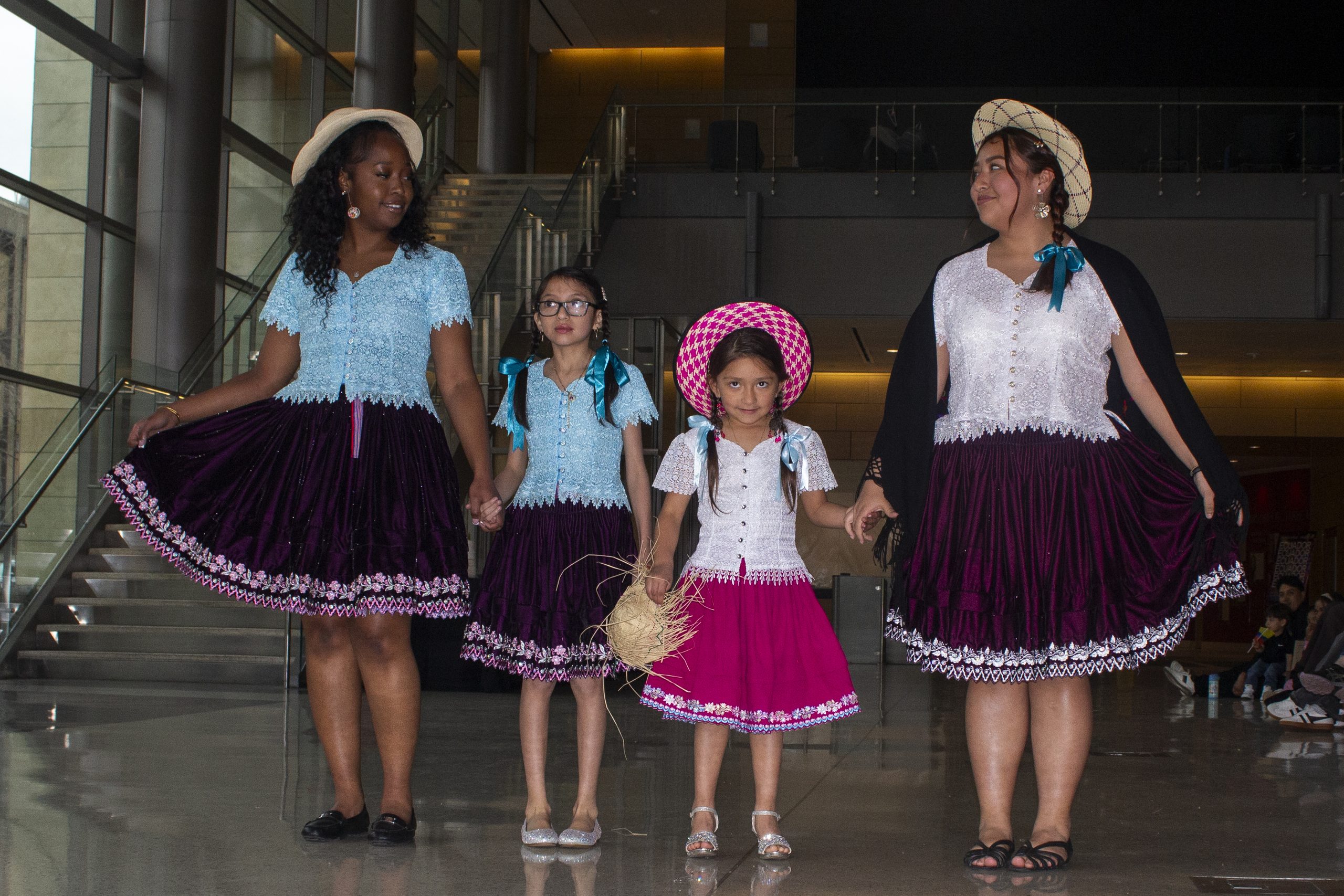
Ultimately, around 130 people attended the show. People stayed to see who won the raffle and waited in a quick-moving line to eat, or even try for the first time, Ecuadorian food catered by Northeast Philadelphia restaurant El Rinconcito.
Barba-Castro is excited for more opportunities to share her culture and fashion curating skills. “Maybe there’ll be a next time,” she says.