
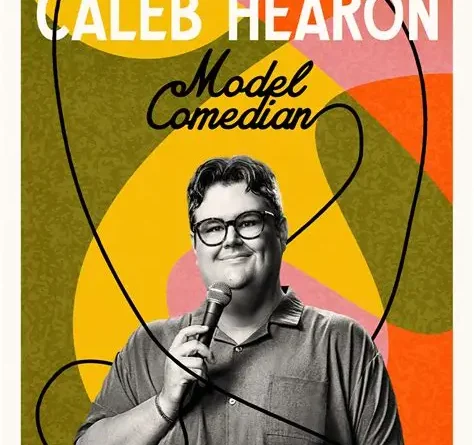
REVIEW: Why Caleb Hearon is the Voice of a Generation
WRITTEN BY: Emma Booth
From small-town Missouri to the comedy clubs of Chicago, New York and Los Angeles, Caleb Hearon is a podcaster, actor and comedian who has skyrocketed in popularity in the past year. His quick-witted dry humor has attracted a large audience and recently got him named Rolling Stone’s sixth most influential person of 2025.
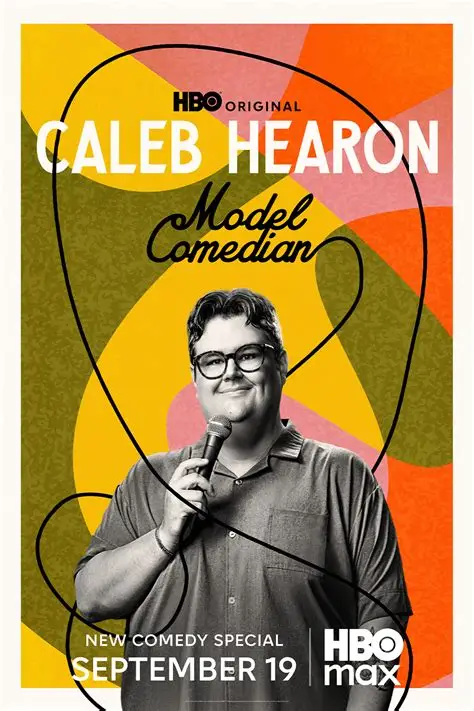
After a comfortable position in the YouTube and TikTok realm from his viral podcast “So True” via Headgum, gaining both acting and writing credits in television and in movies like “Sweethearts” and “I Used to be Funny,” Hearon has taken on a new feat – his first stand-up comedy special on HBO Max.
Just like in his other content, Hearon’s refreshing and lovable personality shines through in this special with his excellent storytelling skills and political satire that we have come to expect from him. However, “Model Comedian” shows us a new side of the podcaster/actor as it leaps through charming silliness and surprising intimacy, solidifying Hearon’s role as a universal voice of a generation that has been long overdue.
Overview:
Filmed at Constellation in Chicago, where his comedy journey began, the first couple of lines in the special really set the tone for the next 60 minutes. He admits, “The world’s on fire, but I’m like, ‘let’s get silly with it, ’ you know? I do. I wake up every day and feel good despite… everything.” This phrase continues to be the overall takeaway of Hearon’s comedy: laughing at the unfortunate.
The title itself, Model Comedian, comes from a hysterically misinterpreted comment posted by one of his followers in response to hate against Caleb, writing: “He’s not a model, he’s a comedian.” This play on words introduces Hearon as the perfect comedian, a model of sorts, while also ironically referencing a below-average feeling he has been forced to believe through growing up gay and poor in the Midwest.
“The world’s on fire but I’m like, ‘let’s get silly with it.’, you know? I do. I wake up every day and feel good despite… everything.”
Hearon asserts this identity at the start of the special, going through experiences of his childhood as an ‘uptight’ and overweight kid in a lengthy and somewhat dragged-out beginning. It involved some crowd participation to act out the “speech he wrote for little fat kids today” to replace the ridiculous sentiment of “sticks and stones will break my bones, but words will never hurt me.” Compared to the other bits throughout this special, this was one of the weaker moments as it felt a bit more predictable, and there wasn’t much comedic chemistry in the crowd interactions.
Caleb’s more popular clipped bit from the special is where he talks about coming out as bisexual on Facebook, which warrants a sizable amount of laughs after explaining how he admired women so much later realizing it “was the gayest thing” he could’ve done.
After a slow-moving beginning, Hearon got personal about having divorced parents and a complicated relationship with his now deceased father, continuing to assert a strong point of view within his comedy. In this more vulnerable part of the set, he gets into the ironic and absurd feelings of grace he felt towards a man who didn’t want to be a father to him.
However, Hearon quickly transitioned back into humor, closing these reflections with “If any of you have ever been through anything, this part will probably be hitting like crazy. But as the only person who’s ever been through anything, you’ll have to just take my word for it.” His ability to blend the serious and silly shines here.
Hearon’s anecdotal stories lead him into a political tangent about a phenomenon he coined “redneck progressivism” that his father possessed. According to him, people from places in the Midwest or the South often wish the best for everyone – even the ones who share a completely converse opinion from them. Throughout his humor and analysis, Hearon makes a case that, even if we encounter people who don’t seem to embrace us for who we are, we can always learn from these encounters and need to be able to laugh at how we handle them.
“If any of you have ever been through anything, this part will probably be hitting like crazy. But as the only person who’s ever been through anything, you’ll have to just take my word for it.”
On the theme of political comedy, Hearon doesn’t hesitate to rip into far-right political figures, calling out Vice President, J.D. Vance, Ron DeSantis, Ben Shapiro and Jordan Peterson for being extremely flamboyant while scapegoating gay and trans people. His delivery of jokes and impressions in this bit was super fun to watch.
One of the funniest and most memorable bits of the night was the last segment featuring Hearon’s exaggerated storytelling about a trip with his queer friend group to the Holocaust Museum in Berlin, where their tour guide couldn’t stop making tasteless jokes.
He hilariously refers to the site of the tour as “Holocaust,” saying, “So we got tickets to Holocaust,” or acting out faces of agony that he practiced before he went to “Holocaust.”
The bit was especially funny in tandem with Hearon’s impersonation of the guide, Carla, who had a signature catchphrase, “Stop, stop, stop…[long pause] Okay, let’s go! [aggressively struts]”. He ends the special by repeating the phrase that inspired the whole concept of the show, saying, “He’s not a model, he’s a comedian”.
There is lots of whimsy and fun at the beginning with some hard hitting and serious conclusions towards the end that create the perfect balance between advocacy and amusement. It’s important to see someone turning the dark into light, still managing to spread laughter during times of lengthy frustration.
Final Thoughts:
While a lot of Hearon’s likability comes from his self-awareness and his ability to successfully portray his point of view as a lovable and giggly guy, it also comes from his acute awareness of modern-day issues.
Arguably, all comedy is political. It pokes fun at social structures and demographics and has often toed the line between offensive and accurate humorous conclusions. Hearon understands this line beautifully. Well-versed in the political climate as a former local Missouri government employee and a sociopolitical communications major, Hearon uses his cultural knowledge to enhance his comedy.
Caleb inspires through his unapologetic political takes and encouragement of activism that yields reflection. There are many moments throughout Model Comedian where he emphasizes more serious topical issues like trans rights, while also finding a way to make fun of the situations and people that create them, an inspiring skill we could all learn from.
Hearon has a quality that keeps the audience coming back, which not many people in the industry still have: his relatability. His success has not made him less ‘of the people’ or less willing to be vulnerable to connect with watchers. Whatever background you come from, whether you are gay, straight, black or white, you can see yourself in him or his ability to champion for you.
In Model Comedian, Caleb Hearon successfully creates a safe space for individuals because something is endearing about him – something that everyone can see a part of themselves in.


Love this, Emma!