REVIEW: Emma’s Sept. 2025 Movie Reviews
Follow WHIP Twitter Facebook Instagram
WRITTEN BY: Emma Booth
As a lover of TV and movies and one of the hosts of Film Maniacs on WHIP, I try to keep up with my Letterboxd watchlist in my free time (@ebooth7). In September, I checked some movies off of my watchlist and into my diary; some underwhelming and others so overwhelming that I couldn’t look away.
*Spoiler alerts ahead*
Y2K (2024) – Kyle Mooney: 3/5
The directorial debut of Kyle Mooney had big shoes to fill. Mooney’s work on SNL is well-renowned, and with young stars like Rachel Zegler (Snow White, Ballads of Songbirds and Snakes) and Jaden Martell (Knives Out, It), you would expect an amusing watch; however, Y2K isn’t particularly noteworthy.
The film follows Eli, played by Jaden Martel, a high school junior who longs to be with Laura, played by Rachel Zegler, a pretty and popular girl at his school who has a knack for coding and computer science. On the night of New Year’s Eve, 1999, Eli and his friend Danny find themselves in a living nightmare where the conspiracy of Y2K has taken over, and all machines around them have upgraded miraculously to destroy all of humanity.
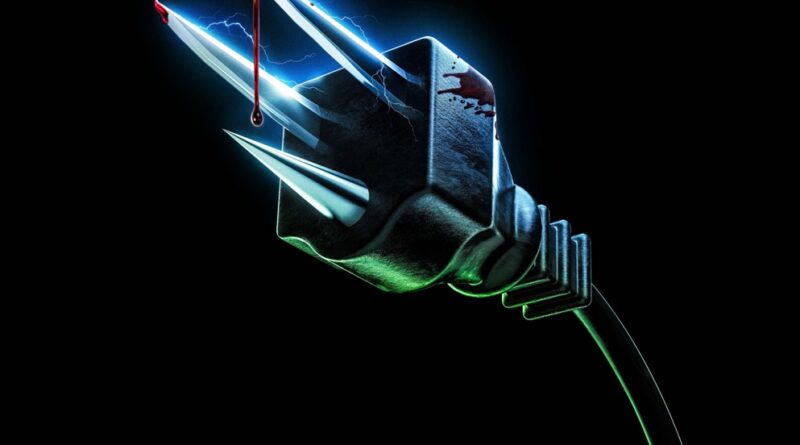
We got a peek into the main premise of the movie from the trailers and ads through imagery of computers as well as the title itself, referencing the real fear of many in the year 1999 that the end of the world would occur on New Year’s Day due to the increasing presence of technology in society. Among recent trailers that disclose almost entire plotlines, I believe the marketing team did a good job of keeping the storyline vague.
With this far-fetched apocalypse story, we get a lot of silly horror moments. Y2K has a similar format to most horror/thrillers, where the danger does not become apparent until about halfway through the movie. It has an absurd array of gruesome and comical deaths, all within about 10 minutes of each other, as soon as danger begins to ensue. Some examples include getting smacked in the head by a VHS tape, being drilled in the head by a Tamagotchi, and even simply hitting the ground hard enough after falling from a skateboard trick. These moments were probably the best part of the movie because of the randomness and shock factor that they added.
As the creative behind the whole film, Kyle Mooney’s character was an obvious standout. He did what he does best: stealing the scene with his comedic timing, delivery and overall presence. His character, Garrett, the VHS store clerk, had one of my favorite scenes when he, Eli and Danny were getting high in the back of the store together. Garrett went on long tangents to the boys that made absolutely no sense regarding the meaning of life and societal issues. On SNL, Mooney is known for his characters that exaggerate stoner culture and the laid-back, chill, dumb dude trope; talking so much with the intent of making astounding conclusions but actually saying so little. We also have a celebrity cameo from Limp Bizkit’s lead singer, Fred Durst, who joins the group after his bandmates were killed during their performance that night.
For me, most of the other acting and characters fell flat. The plot focused on Danny and Eli so heavily that once we got to these “heart-to-heart” moments between members of the surviving group, it was difficult to feel sympathy for characters that we were not really exposed to. I understand that the point was to create cliches that maybe don’t require much explanation or backstory, because honestly, that’s what high school feels like, but we needed more of a background to feel something.
I was especially disappointed with Laura’s character as the main love interest because she wasn’t given much substance. It felt like she wasn’t able to decide things for herself, but was forced into situations based on what the men around her wanted. Besides being good with computers and hating her popularity, we didn’t learn much more about her. Those two things make for a “she’s not like other girls” read that I was bored with.
However, my biggest bone to pick with this movie is how early they killed off Danny, Eli’s best friend, played by Julian Dennison. His character was definitely my favorite in the movie, even more than Garrett, because he had some of the best one-liners in the whole film.
He truly embodied the cool but deemed loser, class clown, high school boy type. The comedic relief he brought as a foil to Eli’s shy and quiet demeanor made their character dynamic extremely fun. However, his death was pretty immediate before the surviving group even left the original house where the party was held. I wish we had gotten to see more moments with Danny and Eli taking on the end of the world together, and had Danny’s death occur towards the end of the movie. From an audience standpoint, we don’t have enough time to become emotionally invested in his character or his selflessness within that scene for it to be as meaningful as it could’ve been if his character was more drawn out.
Comparing Y2K to another successful satirical horror film, Bodies, Bodies, Bodies, we are introduced to the characters all at once and given a lot more information about their relationships to each other that exacerbates the sillier moments of the plot. The film successfully pokes fun at cliches, stereotypes and the superficialness of young people. Y2K wasn’t able to successfully establish everyone’s “schtick”.
Overall, Y2K gives for an average movie experience with many humorous moments and funny bits, but an overwhelming amount of missing opportunities and lack of character development.
Weapons – Zach Cregger: 4/5
Weapons has been the horror movie on everyone’s tongue for the past few months, grossing around $266 million worldwide, and for good reason. As a window into the grief of the writer himself, it has a lot to say about the spirit of grief and contagion of tragedy. With a good mix of jump scares, an eerie ambience and symbolic measures, it makes for a chilling watch with a unique and well-done format that emphasizes the different responses of trauma to tell a story.
The film separates itself into chapters from the contrasting points of view of each of these characters in the fallout of the disappearance of 17 children, all in a single third-grade class. Each of the six main characters has an extremely well-thought-out development and specific thematic purpose, representing the different ways in which one responds to grief. Each of the characters’ parts feels like various pieces of the mystery being brought together, and it is so satisfying to watch the pieces fall into place. It feels like you are solving the mystery in real time alongside them.
As the teacher of all the students who disappeared, Justine (Julia Garner) represents guilt and shame as the town points to her as the culprit of the disappearances. A father of one of the missing kids, Archer (Josh Brolin), represents blame and resentment; a control freak who’s not winning and taking the first logical route to blame Justine and bring his enemy close. A local drug addict and homeless guy, James, represents isolation by feeling like he is a victim of life and believing his flaws and missteps are contagious.
Creator and Director, Zach Cregger, was inspired by the sudden passing of his friend, Trevor Moore, for the main themes of this film. He has stated in many interviews that this project feels very personal to him; the writing process came about as a coping mechanism to his grief and is somewhat of a “diary entry”. Each of the 6 characters is meant to be a specific personal experience of Cregger in the aftermath of his friend’s passing.
The film also makes many connections to the real-life story it is based on. One instance of this is the significance of the time of disappearance of the children in the movie, 2:17 am. This is also the reported time of Moore’s death, as he tragically fell from a balcony while intoxicated.
There are some especially chilling visuals in this movie, such as the scene of Marcus, the school principal, running at full speed towards Justine, bloody with his eyes bulging out of his skull, to attack her. The main antagonist, our queen Gladys (Amy Madigan), wears unsettling clown makeup throughout the film that is utilized for some major jump scares.
Gladys is one of the most discussed characters of the film, deemed iconic by Gen Z on the internet for her funky fashion sense and accessories. She latches onto the main six like a parasite, infiltrating their lives, demonstrating the self-destructive habits, temptations and decisions that affect our lives when we experience grief.
Alcoholism and addiction are an overlooked central theme of this movie, relating to the creator’s own struggle with sobriety as well as Moore’s. We can see this through the symbolic triangle within a circle shown at the end and beginning of the movie, corresponding to the alcoholic anonymous symbol. Gladys is the opposite of a guiding force, such as AA, but rather an addictive force that each character cannot rid themselves of, bringing them in closer and deeper and hurting the ones they love in the process, just like alcohol has the power to do. It’s genius.
The one aspect of this movie I didn’t particularly like was the child narrator, both at the beginning and end of the movie. For me, it didn’t add anything special to the film and did something that I think filmmakers like to do when they really want an audience to get a concept called “telling, not showing”. This means they are more explicitly telling us something that could’ve (and in this case should’ve) been implied through an obvious line or shot. I believe there could have been a less on-the-nose method to introduce and conclude the story, and it also took me out of the serious horror because it was a bit too cliché and lacked strong voice acting.
Although not necessarily realistic (depending on what supernatural forces you believe in), Weapons is a cautionary tale conveying how we weaponize everything when we are at our lowest. Whether it is our community against a common enemy, substances or children, we learn that there is only one thing that will come of using weapons: destruction and pain.
Beau is Afraid – Ari Aster: 5/5
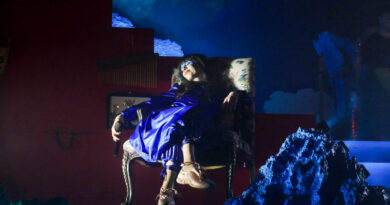
If you’ve seen Aster’s previous films, Hereditary and Midsommar, you are aware of his disturbing aesthetic that encourages the uncomfortable and twisted. Beau is Afraid is no exception– an insanely twisted masterpiece with so many layers to it. Although with Beau is Afraid, Aster has delved into a more surrealist, dreamscapes journey that plays on selective perspective in comparison to his other works. It was definitely my favorite watch of September.
An extremely lengthy watch at 3 hours, Beau is Afraid warrants discussion, which I believe makes this film a success despite tanking in the box office and receiving polarizing audience ratings.
The movie follows a man named Beau (Joaquin Phoenix), an anxiety-ridden man who confronts his darkest fears as he travels back to his childhood home. We experience everything through Beau’s anxieties, the world that he has created in his mind and convinced himself is true.
Ari Aster provides you with a feast of provocative confusion and surrealist cinema. Everything bad that could happen to him happens in the first hour. But one quickly realizes that it might be through a misguided perspective. What we see in the film is a version of reality, but it’s Beau’s version of reality cranked up to the highest level, with his augmented version taking more and more control over what we are watching as the movie progresses. The visuals become more dreamlike and impossible fantasies ensue as Beau continues his journey to see his mother. Sometimes things are exaggerated in this movie, and other times it is clearly mythological, which are meant to be read literally but interpreted figuratively. He has a series of encounters with strangers that all seem to be tied back to the source of evil that is his mother, and always has been.
It’s important to mention that categorizing Beau as an “unreliable narrator” is an interpretation void of any substance. We tend to give this label when we watch something that doesn’t make sense and confuses us too deeply, but it’s unhelpful to understanding who Beau is. If he’s just an unreliable perspective, then his experience isn’t valid, and important plot points can be overlooked and deemed as just another one of Beau’s crazy imaginations. He’s not just some crazy guy, but a man with deep-rooted trauma and a complicated relationship with the world due to the overbearing presence of his mother in his life.
We are meant to be interpreting many of these impossible events symbolically, such as the alienation from people, even those who are meant to love and know him best, like Beau’s mom.
His guilt and anxieties regarding his mother, Mona Wasserman (Patty LuPone), manifest in the giant conspiracy where everyone he encounters is involved in her scheme in some way. To him, it is not a surprise that she would go to great lengths to embarrass him; she is clearly very controlling and narcissistic, and weaponizes guilt against him. She eventually tells him herself, she wants him to be terrified of the world so that he can stay in her arms, but shames him for not being competent. Talk about mommy issues.
Because of its length and intricacy, there are so many pieces of this film that can be dissected and analyzed in so many different ways, which is why I’m such a fan. You have to be a mastermind, such as Aster, to invent a world in which a story like this can be told and successfully transport your audience into it. We feel the anxieties along with Beau as his life continues to crumble, and we see why he has become so fearful of upsetting everyone around him.
How can you stop incriminating yourself when you don’t know what your crime is? Is he guilty of being a bad son? Or being ungrateful? Probably not, but he meets his fate at the end of the film in a shocking culmination of events that definitely keeps your jaw agape.
Beau is Afraid is a movie I’m not sure if I can rewatch, but one that I will continue to scratch my head at and marvel at how Aster can portray anxiety and what it feels like to have no control over your life. Beau’s story will stick with me.